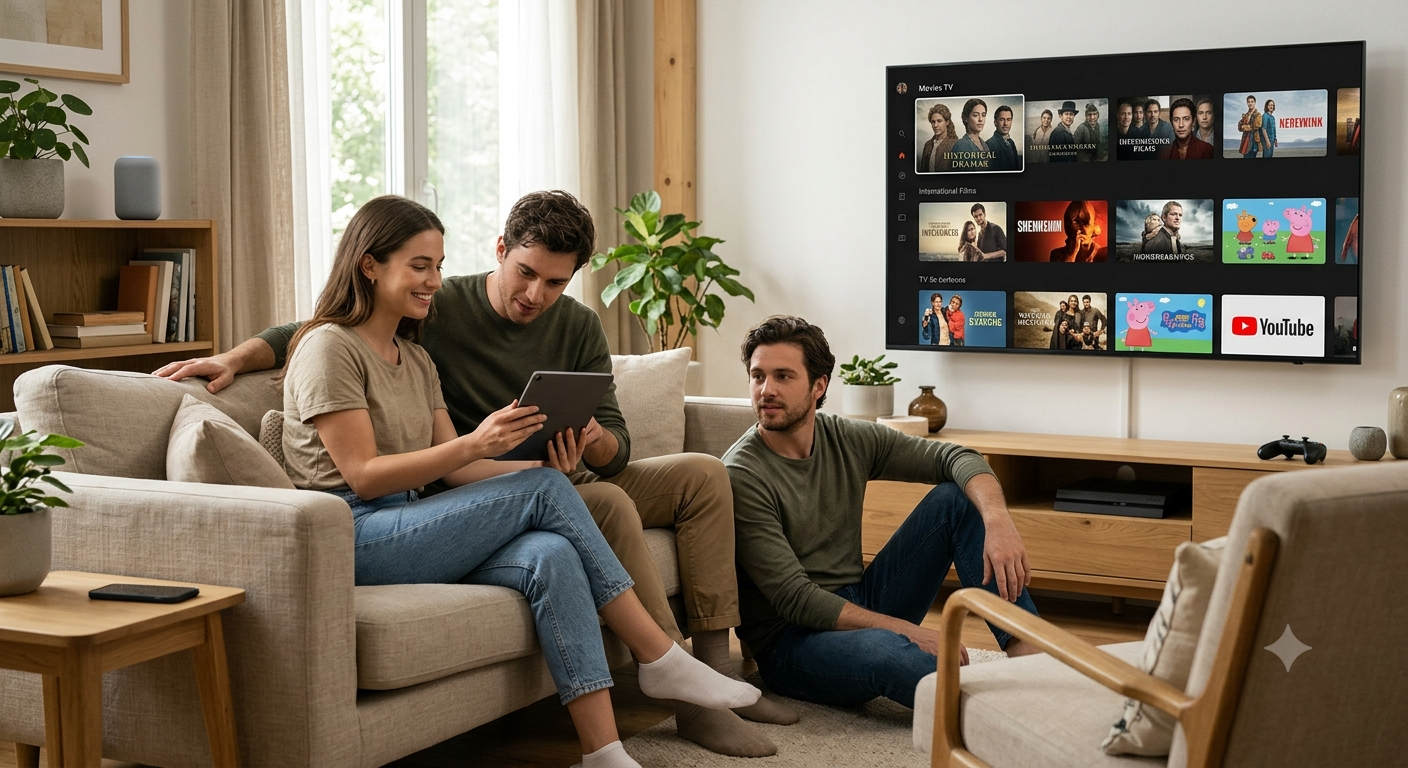
The architecture of modern culture is undergoing its most profound structural shift since the invention of broadcast television. For nearly a century, entertainment operated through a tightly controlled linear pipeline: major Hollywood studios greenlit projects, record labels controlled music distribution, television networks set fixed viewing schedules, and movie theaters held an exclusive monopoly on first-run feature films.
Today, that centralized framework has collapsed. The convergence of streaming platforms, artificial intelligence (AI), and social media networks has fundamentally altered how creative works are financed, produced, distributed, and consumed. According to market data from Precedence Research, the global video streaming market reached $159.98 billion in 2025 and is projected to surpass $195 billion in 2026. Simultaneously, research indicates the market for generative AI in media and entertainment is accelerating at over 26% annually.
This transformation goes beyond simple technological convenience. It represents a fundamental redistribution of influence across the entire media ecosystem.
Table of Contents
The Rise of Streaming: Decentralizing Distribution
Streaming services turned media consumption from a schedule-bound activity into an on-demand environment. The transition from physical media (DVDs, CDs) and linear television to cloud-based catalogs altered consumer expectations around access, choice, and convenience.
The Shift from Linear TV to On-Demand Platforms
Traditional television relied on scheduled programming, designated broadcast times, and regional distribution rights. Streaming platforms dismantled these geographic and temporal limits, giving audiences immediate access to global content libraries.
Traditional Linear Model
[ Studio / Label ] ──> [ Network / Theater ] ──> [ Fixed Schedule ] ──> [ Passive Viewer ]

Modern Streaming & Digital Model
[ Creator / Studio ] ──> [ Cloud Platform ] ──> [ On-Demand + AI Discovery ] ──> [ Interactive Viewer ]
This model changed audience behavior. Binge-watching became a common consumption pattern, replacing the traditional weekly release schedule for many flagship series. Furthermore, according to Nielsen media reports, streaming accounts for over 44% of total television usage in major markets, signaling a permanent shift away from cable and satellite packages.
Business Models: SVOD, AVOD, and FAST
To balance rising production budgets with market saturation, streaming platforms have diversified their revenue structures:
-
Subscription Video on Demand (SVOD): Platforms like Netflix and Disney+ originally relied exclusively on ad-free monthly subscriptions.
-
Ad-Supported Video on Demand (AVOD): To capture price-sensitive subscribers, major services introduced lower-cost tiers featuring targeted advertising. Netflix’s ad-supported tier alone expanded to over 250 million monthly active users globally in 2026.
-
Free Ad-Supported Streaming TV (FAST): Services such as Pluto TV and Tubi offer linear-style scheduled channels at no cost, supported entirely by advertising. This format appeals to viewers seeking lean-back, passive viewing without subscription costs.
| Revenue Model | Primary Monetization | Example Platforms | Key Advantage for Viewers |
| SVOD | Monthly/Annual Subscription | Netflix, Apple TV+, Max | Ad-free, premium original library |
| AVOD | Tiered Subscription + Ads | Netflix (Standard with Ads), Hulu | Lower price point for premium shows |
| FAST | Digital Advertising | Tubi, Pluto TV, The Roku Channel | Completely free, linear convenience |
Globalization and the Decline of Traditional Gatekeepers
Historically, non-English media faced distribution hurdles in Western markets due to dubbed audio constraints and limited theatrical releases. Streaming platforms removed these distribution bottlenecks by integrating multi-language dubbing and localized subtitling at scale.
International productions—such as South Korea’s Squid Game, Spain’s Money Heist, and Japanese anime series—demonstrated that local content can achieve global reach. Consequently, local production hubs in Latin America, Asia, and Eastern Europe now receive direct investment from global entertainment companies.
How AI Is Transforming Entertainment: From Script to Screen
Artificial intelligence has shifted from a back-office analytics tool to a core component of visual effects, audio engineering, game development, and pre-production planning.
                  ┌── Pre-Production: Script analysis, concept art, budget modeling
                  │
AI Integration ───┼── Production: Real-time rendering, dynamic lighting, virtual sets
                  │
                  └── Post-Production: Automated editing, AI dubbing, visual effects
Recommendation Engines and Algorithmic Discovery
At the core of platforms like Netflix, Spotify, and YouTube are machine learning algorithms that process billions of data points—including watch duration, pause frequency, search history, and device type.
These recommendation engines do not merely suggest titles; they actively personalize user interfaces. For example, Netflix dynamically alters thumbnail artwork for the same movie based on a user’s past viewing habits, showing an action sequence to fan of action films, or a character close-up to fans of drama.
Content Creation, Visual Effects, and Audio Engineering
In visual and audio production, AI tools reduce manual labor across several pipelines:
-
Virtual Production & VFX: Machine learning algorithms assist visual effects artists with digital de-aging, rotoscoping, and sky replacement, completing tasks in hours rather than weeks.
-
Localization & Synthetic Dubbing: AI voice synthesis platforms translate performance dialogue into foreign languages while preserving the original actor’s voice tone, inflection, and cadence. Advanced neural networks can even adjust lip movements in video to match translated audio track pronunciations.
-
Music Composition & Sound Design: Sound engineers use machine learning to stem-separate mixed audio tracks into isolated vocals, drums, and instruments, accelerating master remixing and soundtrack composition.
Generative AI and Dynamic Interactive Content
Generative AI introduces real-time asset creation to gaming and digital media. Video game developers deploy neural networks to generate vast 3D environments, complex non-player character (NPC) dialogue paths, and procedural textures. This reduces production cycles for triple-A titles while enabling smaller independent studios to build expansive game worlds.
The Growing Power of Social Media: Discovery and Creator Culture
Social media platforms have evolved beyond promotional vehicles; they are now primary entertainment hubs. Platforms such as TikTok, YouTube, Instagram, and Twitch compete directly with traditional film and television for consumer attention.
Traditional Media Flow (Linear & Slow)
[ Announcement ] ──> [ Press Tour ] ──> [ Theatrical Release ] ──> [ Audience Review ]

Social-Driven Media Flow (Viral & Instant)
[ Short Clip / Trend ] ──> [ User Co-Creation ] ──> [ Real-Time Demand ] ──> [ Box Office / Stream Peak ]
Changing Attention Spans and Short-Form Video
The popularity of short-form video content on platforms like TikTok and Instagram Reels has influenced storytelling structures. Narrative arcs that once unfolded over a two-hour feature film are increasingly adapted into bite-sized, high-engagement content pieces designed to capture immediate interest.
This environment has forced traditional media companies to adapt. Film trailers, music releases, and television shows are now routinely edited and paced to yield shareable, viral clips optimized for vertical mobile screens.
Music Discovery and Narrative Hype
Social media has restructured the music industry’s artists-and-repertoire (A&R) pipeline. Songs now frequently achieve commercial success on the Billboard charts after trending in user-generated videos on TikTok. Record labels actively monitor social analytics to identify breakout tracks and sign independent artists who have already established organic viral momentum.
Similarly, viral marketing campaigns—such as the fan-driven social media phenomenon surrounding the simultaneous theatrical releases of Barbie and Oppenheimer (“Barbenheimer”)—demonstrate how user-generated hype can directly drive global box office sales.
The New Economics of Entertainment
The convergence of streaming, AI, and social channels has altered revenue distribution, content financing, and royalty structures across the entertainment landscape.
       ┌── Traditional Model: High barrier to entry, centralized funding, heavy gatekeeping
       │
      VS
       │
       └── Creator Economy Model: Lower barrier, direct monetization, fan-funded models
The Creator Economy vs. Legacy Studios
The creator economy allows independent filmmakers, musicians, educators, and gamers to bypass traditional studio gatekeepers. Monetization avenues include:
-
Direct ad-revenue sharing (YouTube Partner Program)
-
Channel memberships and subscriptions (Twitch, Patreon)
-
Brand sponsorships and integrated product placements
-
Direct digital sales and fan-funded production campaigns
As a result, top digital creators command audiences that match or exceed those of traditional cable networks, diverting advertising dollars away from conventional media buys.
The Changing Function of Gatekeepers
Talent agencies, record labels, and film studios no longer maintain an absolute monopoly on audience access. While studios retain an advantage in financing $200 million blockbuster productions, independent creators can build global franchises using consumer cameras, cloud-based editing software, and direct-to-consumer distribution platforms.
How Audiences Are Gaining Influence
Audiences have shifted from passive consumers to active participants in the creative cycle.
-
Co-Creation and Fan Participation: Interactive content, live streaming chats, and community forums allow audiences to directly influence media development. Video game studios regularly release early-access builds, using community feedback to shape mechanics, story points, and balance patches prior to official release.
-
Data-Driven Greenlighting: Production companies rely on audience analytics, social listening tools, and search trends when deciding which projects to greenlight. While this reduces financial risk for studios, critics argue it can lead to derivative content choices that prioritize established intellectual property over novel creative risks.
Challenges and Controversies
While technological integration offers operational efficiencies, it also raises ethical, legal, and economic challenges.
Key Industry Challenges
├── IP & Copyright: Unauthorized training on artist catalogs
├── Synthetic Media: Deepfakes, unauthorized digital likenesses
├── Labor Displacement: AI impact on writers, voice actors, and visual artists
└── Consumer Friction: Subscription fatigue, content fragmentation, price increases
AI Copyright, Intellectual Property, and Likeness Rights
The rise of generative AI models trained on vast datasets of copyrighted artwork, literature, and music has led to legal disputes across the creative sector. Major record labels, visual artists, and authors have filed copyright infringement lawsuits against tech firms, arguing that using proprietary content to train generative models without authorization or compensation violates copyright protections.
Additionally, digital likeness rights have emerged as a central issue. The unauthorized creation of deepfake videos, voice clones, and digital avatars poses serious risks to performers, forcing labor unions to negotiate protective clauses regarding digital replication.
Labor Displacement and Changing Creative Roles
The integration of AI software into creative pipelines has created friction between entertainment executives and industry labor forces. The landmark Hollywood writers and actors strikes brought these concerns to the forefront, resulting in contractual protections regarding how generative AI can be used in script development and performance capture.
AI Impact Matrix across Creative Roles
┌──────────────────┬───────────────────────────────┬───────────────────────────────┐
│ Industry Role    │ Technical Risk Area           │ New Skill Opportunity         │
├──────────────────┼───────────────────────────────┼───────────────────────────────┤
│ Concept Artists   │ Automated background generation│ Prompt engineering & direction│
│ Voice Actors     │ Synthetic voice cloning       │ Voice-bank licensing & control│
│ Translators      │ Automated machine translation │ Nuance editing & localization │
│ Post-Production  │ Automated rotoscoping & edit  │ Pipeline optimization         │
└──────────────────┴───────────────────────────────┴───────────────────────────────┘
Streaming Fatigue and Platform Fragmentation
For consumers, the proliferation of standalone subscription services has introduced digital fatigue. As studios pulled their content libraries from centralized platforms to launch proprietary apps, the media environment fragmented. Rising subscription prices, tier adjustments, and password-sharing restrictions have led to increased churn rates, with consumers regularly subscribing, canceling, and switching between platforms based on specific show releases.
What the Future of Entertainment Could Look Like
As technologies mature, the boundaries between film, gaming, social media, and live events will continue to blur.
Traditional Separation:
[ Movies ]   [ Video Games ]   [ Social Networks ]   [ Live Concerts ]

Future Convergence:
┌──────────────────────────────────────────────────────────────────┐
│                   Unified Immersive Ecosystems                   │
│  Interactive Real-time Rendering + AI-Driven Personalized Narrative │
└──────────────────────────────────────────────────────────────────┘
-
Interactive and Personalized Narratives: Future media releases may feature adaptive storylines that adjust dynamically based on viewer choices, emotional responses, or personal preferences, blending traditional filmmaking with game design.
-
Virtual and Spatial Media Consumption: As spatial computing hardware, virtual reality (VR), and augmented reality (AR) technology improve, live entertainment—such as music concerts and sporting events—will offer immersive 3D views, allowing users to select any camera angle in real time.
-
Hybrid Creator-Studio Coalitions: Major entertainment studios will increasingly partner with internet-native creators, adapting digital-first intellectual property into film and television franchises while deploying creator-led marketing strategies.
Strategic Overview: The Changing Entertainment Ecosystem
The structural transformation across the media landscape reflects a clear shift in industry priorities, distribution channels, and revenue models.
                          PREVIOUS MODEL                  NEXT-GEN MODEL
                   ┌──────────────────────────┐    ┌──────────────────────────┐
  Distribution ───>│ Scheduled Linear TV      │───>│ On-Demand + AI Discovery │
                   └──────────────────────────┘    └──────────────────────────┘
                   ┌──────────────────────────┐    ┌──────────────────────────┐
  Production   ───>│ Centralized Studio Hubs  │───>│ AI-Assisted + Global     │
                   └──────────────────────────┘    └──────────────────────────┘
                   ┌──────────────────────────┐    ┌──────────────────────────┐
  Audience     ───>│ Passive Viewer           │───>│ Active Co-Creator        │
                   └──────────────────────────┘    └──────────────────────────┘
The entertainment industry is undergoing a structural evolution driven by the combined forces of streaming platforms, artificial intelligence, and social media. Streaming transformed distribution by making media globally accessible on demand; social networks redistributed promotional power to creators and digital communities; and AI tools are altering every stage of the production pipeline, from pre-production concept art to post-production localization.
These advances offer substantial advantages, including lowered barriers to entry for independent creators, personalized discovery for audiences, and streamlined workflows for studios. However, they also introduce challenges regarding artist copyright protection, labor displacement, and platform saturation.
Ultimately, technology is reshaping not only how media is created and distributed, but also how humans connect through narrative art. Success in this evolving environment will belong to those who use these tools to enhance, rather than replace, human creativity.